
Artificial Intelligence Engineering in Vijayawada is becoming one of the most popular career choices for students who want a future-focused engineering education and strong technology career opportunities. The course builds practical knowledge of machine learning, intelligent systems, automation and software development through industry-oriented teaching.
PSCMR College supports students with modern technical education, practical training and a career-focused learning environment that prepares them for the technology industries of the future.
Parents and students today want engineering programmes that offer long-term career growth, industry relevance and future-ready skills. AI engineering is in strong demand because businesses now rely on automation, analytics, robotics and intelligent software. Students who enjoy coding, problem-solving and new technology are increasingly choosing this field after Intermediate.
Why Is Artificial Intelligence Engineering Becoming Popular in Vijayawada?
AI engineering is growing fast in Vijayawada because students want a degree that keeps pace with technology trends and what industry needs. Parents, in turn, prefer courses that offer career stability, practical learning and strong placement opportunities.
Vijayawada has become an important destination for engineering aspirants. Students here have access to reputed institutions, placement-focused programmes and modern technical infrastructure without the high living costs of a metro city. At PSCMR, students build technical confidence through modern classrooms, practical labs, workshops and career-oriented academic support.
AI and automation are now used in healthcare, banking, cybersecurity, manufacturing and software development. This has sharply increased interest in Artificial Intelligence and Machine Learning programmes. Students also like that AI skills open doors across many industries instead of limiting them to one domain. That flexibility is a big part of why the scope of AI engineering in India is so attractive for long-term careers.
Growing Demand for AI Careers
Demand for AI skills in India keeps rising as businesses invest in intelligent systems and automation. Students with AI engineering skills often find better opportunities in software, analytics, robotics and cloud technology. As more companies adopt AI in their daily operations, graduates who understand both the technology and how it’s applied are becoming increasingly valuable.
What Is Artificial Intelligence Engineering?
Artificial Intelligence engineering is a specialised branch that combines computer science, machine learning, data analytics and intelligent software. It teaches students how machines and digital systems process information, solve problems and automate tasks.
The degree shows students how AI-driven systems are built and used in real-world applications, from recommendation engines and chatbots to image recognition and predictive analytics. Students typically study programming languages, deep learning, cloud computing, automation and data analytics.
The course also strengthens logical thinking, technical communication and analytical ability, all of which the technology industry values. Students who love innovation, coding and building software usually find this field both exciting and rewarding. At PSCMR, they get hands-on exposure through coding practice, technical workshops, projects and AI training programmes that support their career development.
Industry-Oriented AI Learning
Modern AI education puts practical learning ahead of classroom theory alone. Workshops, coding activities and technical projects help students see how AI is actually applied. They learn to build models, work with real datasets and solve practical problems.
This industry-oriented approach builds confidence and prepares students for internships and placements. By the time they graduate, students have a portfolio of projects that shows employers what they can do.
What Are the Eligibility Criteria for AI Engineering Admission?
Students applying for BTech Artificial Intelligence generally need to have completed Intermediate with Mathematics, Physics and Chemistry (MPC). These requirements make sure students can comfortably handle the programming, analytics and technical subjects in the course.
Most AI engineering colleges in Vijayawada follow similar admission requirements:
- Intermediate (10+2) with MPC
- Minimum marks as per the institution’s admission guidelines
- A qualifying rank in AP EAPCET or another accepted entrance exam
- Participation in the counselling process for seat allotment
For related programmes and the admission process, see our guide to AI and Data Science admission in Vijayawada. PSCMR also offers guidance and academic support to students planning their engineering journey after Intermediate.
Many students choose AI and ML engineering because maths and logical reasoning play a central role in programming and machine learning. You don’t need advanced coding knowledge before joining, because programming fundamentals are taught in the first semesters.
Importance of Logical Thinking Skills
Students with strong analytical ability and a genuine interest in technology usually adapt quickly to AI and programming concepts. Logical thinking and problem-solving are valuable throughout the course, from writing your first program to designing machine learning models in later years. These skills can be developed with practice, so curiosity and consistency matter more than prior experience.
What Subjects Are Included in Artificial Intelligence Engineering?
The AI engineering curriculum builds strong technical knowledge in intelligent systems, programming, automation and data analysis. It combines computer science fundamentals with advanced AI technologies.
Students in this Computer Science with AI specialisation commonly study:
| Core foundations | AI & advanced topics |
|---|---|
| Python programming | Machine learning |
| Database systems | Deep learning |
| Computer networks | Data analytics |
| Cloud computing | Robotics concepts |
| Software development | Intelligent automation systems |
| Data structures & algorithms | AI programming and analytics modules |
The course structure helps students steadily build their programming knowledge, analytical thinking and understanding of software development. At PSCMR, students strengthen their technical understanding through classroom learning, coding labs, technical workshops and project-based activities. Mini projects, technical events and AI internships add practical exposure that prepares them for industry.
If you’re comparing AI with related branches, read about CSE, AI/ML and Data Science engineering in Vijayawada.
Practical Learning and Technical Exposure
Technical workshops, coding practice and project-based learning help students understand AI-driven software more effectively. Instead of only reading about algorithms, students build and test them. This practical exposure builds technical confidence and prepares students for real business environments, where they’ll need to apply what they know to real problems under real deadlines.
What Career Opportunities Are Available After AI Engineering?
Careers in Artificial Intelligence engineering are expanding quickly because industries now depend heavily on automation, machine learning, robotics and intelligent software. Graduates can explore opportunities in software, analytics, cloud computing and AI-focused companies.
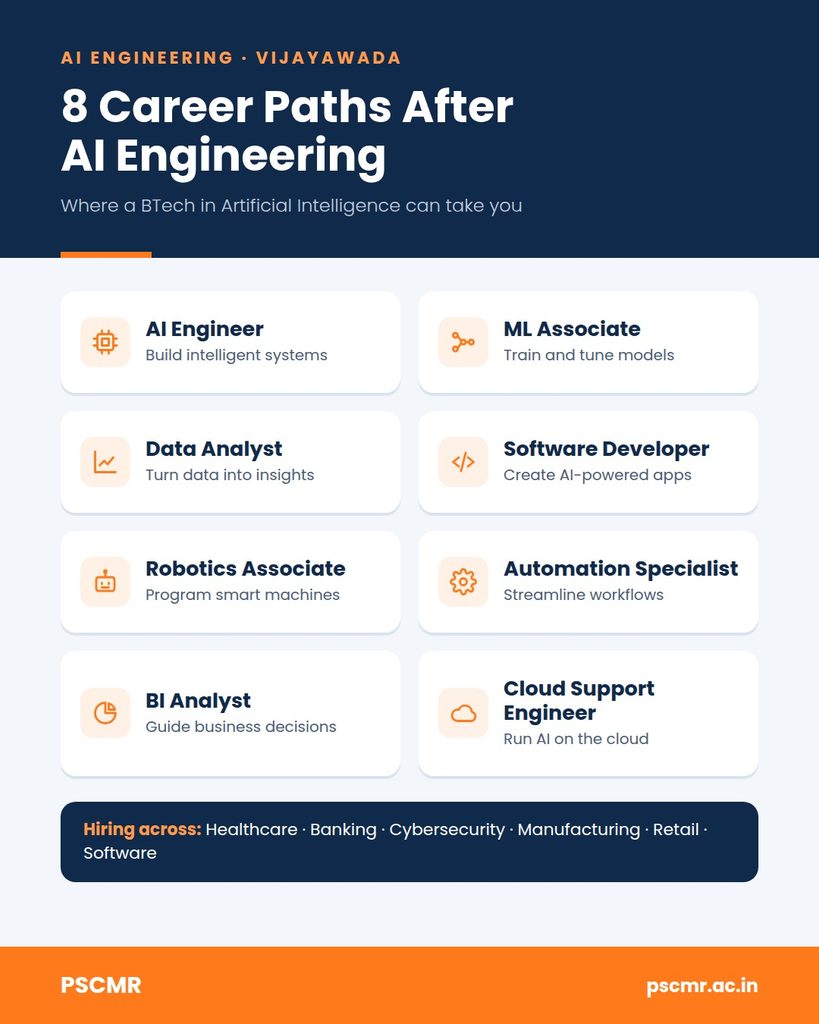
Students who complete this course can apply for roles such as:
- AI Engineer
- Machine Learning Associate
- Data Analyst
- Software Developer
- Robotics Associate
- Automation Specialist
- Business Intelligence Analyst
- Cloud Support Engineer
As AI and automation spread across industries, so do career opportunities for students. Those interested in higher education can go on to advanced studies in data science or specialised areas of AI engineering. PSCMR supports students through practical learning, skill development and placement-focused training.
The future of AI engineering keeps growing as businesses invest more in automation, analytics and intelligent technology.
AI Jobs for Freshers
Many companies now offer AI jobs to freshers who have strong programming skills, analytical thinking and project experience. Employers look for candidates who can show what they have built, not just what they have studied. Students who take part in internships, coding activities and technical workshops usually get better placement opportunities, because they arrive at interviews with practical experience to talk about.
Why Is AI Engineering Considered a Future-Ready Course?
AI engineering is one of the most future-ready engineering courses because intelligent technology is becoming part of everyday business. Healthcare, finance, cybersecurity, education, retail and manufacturing are all adopting AI-powered systems quickly.
Students in this field benefit from long-term career flexibility, because AI keeps evolving and finding new uses. As businesses rely more on intelligent automation and analytics platforms, the scope for AI engineering is expected to keep growing in the years ahead.
The course also develops communication skills, technical confidence, teamwork and analytical thinking. Modern workplaces expect graduates to handle real-world challenges, and these skills matter as much as technical knowledge. PSCMR focuses on building these future-ready skills through practical exposure and industry-oriented technical education.
Future Technology Careers
Emerging AI careers are creating opportunities in robotics, automation, intelligent software development, analytics and cloud technology. Students trained in AI engineering often have an advantage, because industries continue to invest in digital transformation. As new tools and applications appear, professionals with a strong AI foundation are well placed to adapt and grow with them.
How Do AI Engineering Placements Support Career Growth?
AI engineering placements help students start their professional careers with practical industry exposure and technical confidence. Placement-focused learning prepares students for interviews, internships and what employers expect.
PSCMR supports student career growth through:
- Coding practice and technical seminars
- Aptitude training sessions
- Communication skill development
- Project-based learning
- Internship opportunities
- Interview preparation
These activities build industry readiness and professional confidence. Growing demand for professionals skilled in intelligent systems and AI software development has increased placement opportunities in the software and analytics sectors. Students who actively take part in workshops, internships and technical activities generally perform better in recruitment. You can also see the companies that recruit from PSCMR.
Importance of Internship Opportunities
AI internships show students how companies use AI in real business settings. Students work on live problems, learn industry tools and understand how teams build and deploy AI solutions. Internships also improve technical understanding and communication before graduation, and they often lead to pre-placement offers or strong references.
Conclusion
Artificial Intelligence Engineering in Vijayawada has become one of the most popular engineering choices for students interested in future technology careers. From machine learning and automation to intelligent software and analytics, the course builds the technical skills modern industries need.
Students in this field benefit from practical learning, industry-focused education and strong long-term career prospects. The growing demand for AI skills in India has created exciting possibilities in innovation, software development, robotics and intelligent technology.
Parents today look for institutions that combine academic quality, practical exposure, technical confidence and career support. PSCMR offers exactly this through structured learning, modern labs, industry-oriented training and dedicated placement preparation.
Connect with PSCMR College today and take your first step towards a successful future in Artificial Intelligence engineering.
Frequently Asked Questions
What is the eligibility for BTech AI in Vijayawada?
Students need Intermediate with MPC, the minimum required marks, and a qualifying rank in AP EAPCET or another accepted entrance exam.
Do I need coding knowledge before joining AI engineering?
No. Programming fundamentals are taught in the first semesters. Strong maths and logical reasoning help most.
What subjects are taught in AI engineering?
Key subjects include Python, machine learning, deep learning, data analytics, cloud computing, database systems, computer networks and robotics.
What jobs can I get after AI engineering?
Graduates can work as AI engineers, machine learning associates, data analysts, software developers, automation specialists and business intelligence analysts.
Is AI engineering better than CSE?
Both have strong career prospects. AI engineering focuses more deeply on machine learning and intelligent systems, while CSE covers computing more broadly. Choose based on your interests.
Why choose PSCMR for AI engineering?
PSCMR offers practical, industry-oriented training, modern labs, internship support and dedicated placement preparation for AI students.